Author: Kayla Miguel

  • Final Blog Post

    For this last assignment, I will be doing a blog post on how the public can curb or diminish misinformation. Fake news has been an issue in the world for many years, and it is important that individuals are familar with the ways to decrease or stop the spread of misinformation. Dishonest content can also be harmful and dangerous if related to health. In today’s society, the public often becomes distracted by what they see on social media and are more inclined to believe that the information they see is true. It is important for everyone to think twice before they post certain content online.

    My intended audience for this assignment will be teenagers and adults between the ages of 14-57, since many young teens are now tech savvy and are now communicating via text and social media as well as the Internet. The intended audience will be both males and females as well. I think it is important for kids as young as fourteen to learn about the ways to reduce false content. The method I will be using to educate my audience on this topic is informing them how to evaluate or fact-check sources of information. I believe that this approach will be effective because knowing how to recognize false sources is extremely important in the digital world and in everyday life. Evaluation and fact-checking can help people become more observant to false or suspicious content.

    It is never easy being able to recognize real from false content. That is why media literacy is so important in today’s educational system. It turns out that adolescents are more vulnerable or more likely to believe what is posted on digital platforms, such as Facebook, than their adult counterparts How to teach students critical thinking skills to combat misinformation online. According to this article, “Youths who spend about four to six hours a day on the computer say they need help and cannot tell the difference between fact or fictious content.’
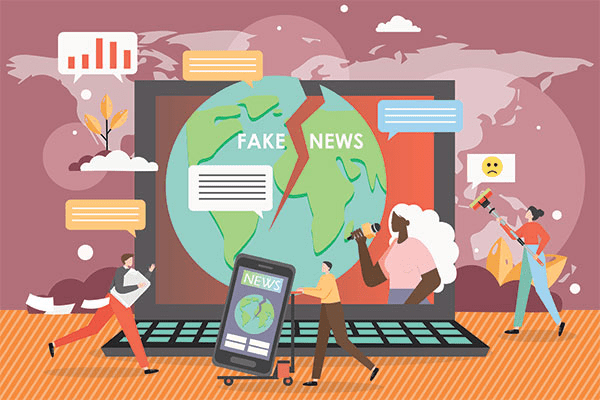
    In addition, a study conducted in Canada found out that 84% of adults could not distinguish real from fake content! This number is shocking and this why media literacy is more important than ever for today’s youth.

    Youth and research: a promising future | Canada Foundation for Innovation

    Well-known and popular digital platforms, such as TikTok and Youtube, are used so much by today’s younger generation that it is making older adults realize that true, honest information is just like civic understanding. Sam Wineburg, an educational psychologist, conducted a study that resulted in 82% of junior high students not being able to set apart an advertisement and a news article from the Internet. More information on this can be accessed here: Evaluating Information: The Cornerstone of Civic Online Reasoning | Stanford Digital Repository

    Many of the studies have been noticed by The United States Government, which have allowed for the development of comprehensive programs, just last year, to teach school-age students how to analyze and locate the sources of online content. These programs will also educate young kids to think critically about how AI produces information.

    Students can be expected to learn about digital citizenship, as well, by knowing how to have healthy experiences online with others. How to teach students critical thinking skills to combat misinformation online.

    There are many effective ways to teach students how to recognize or how to avoid misinformation. It is always helpful as an educator to explain to their students how the source is inaccurate. It is helpful to offer accurate content in its place. It is important to always place inaccurate sources with accurate information. For example, a student says an incorrect answer they got from social media. As a teacher, you can replace this answer with the correct information. Be sure to explain why the answer from the Internet is wrong. This technique is about substituting wrong information with correct sources.

    Another very effective technique as an educator is to always challenge the fake information, not your students.

    Educators should not focus on what their students believe, but the fake sources and what they are. As an example, you can have your students write a rough draft of a report on a certain topic. One of your students references several sketchy sources. You must work with your student and explain how the shady sources work with the argument’s power.

    As an instructor, always develop opportunities for students to work on practicing the evaluation of information. Additional ways that can help students be better analyzers of misinformation are, have them ask themselves who is the author of the source and what is the intended audience, always look for evidence, such as what sources are cited, analyze other sources and see if the information is consistent, and lastly, verify the source is up to date. Students can also evaluate whether the source was meant to be humorous or to intentionally mock someone or something. Here is the link to these techniques: Teaching students to recognize misinformation – Teaching@UW
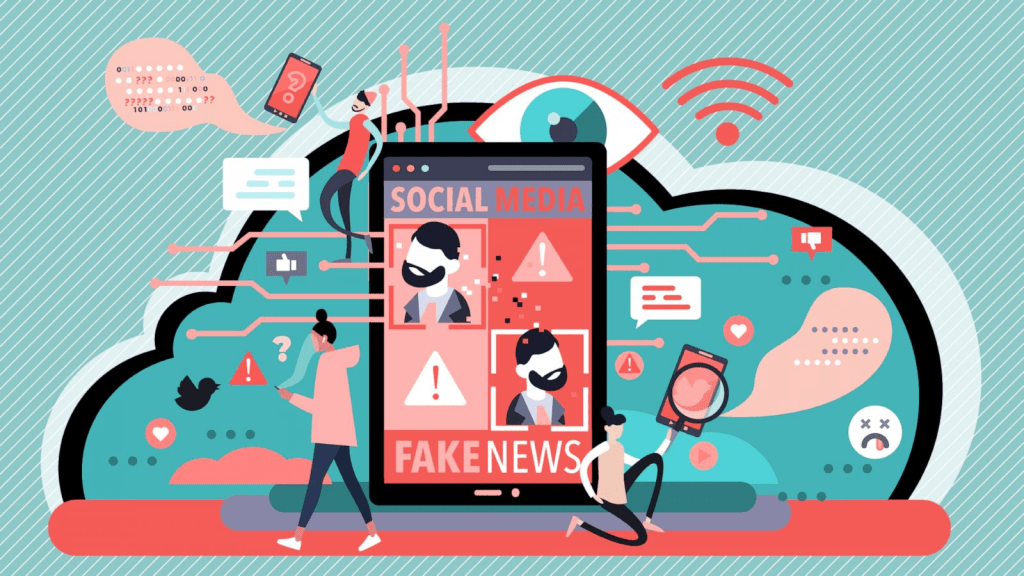
    Individuals in society are also able to curb or diminish misinformation by debunking or fact-checking sources. Research has found that debunking is very successful in real-world settings and individuals. However, fact-checking has its cons. It can be very time-consuming, and people often become very predisposed to fake content on social media. More studies still need to be done about the true effects of fact-checking.

    Link to article: What interventions can be used to counter misinformation effectively?

    Still, it helps if individuals do have basic fact-checking skills to determine a source’s credibility and to think twice before they post a specific content.

    Pre-bunking assists people in being able to spot false content in the first place.

    Research has indicated that pre-bunking is workable in real-world settings, such as digital platforms. More studies, however, need to be conducted on pre-bunking. Literacy training is very important to today’s youth and society. They help people determine a source’s credibility. This type of training has the most potential when compared to other interventions to counter misinformation. Nudging involves very small environmental changes that alter individuals’ behaviors to try and prevent them from sharing dishonest information. Nudges have been found to have great significance when combined with inoculation. More research, however, still needs to be done. What interventions can be used to counter misinformation effectively?

    In conclusion, misinformation has been an issue for decades. There are many ways educators and individuals can take to curb the spread of fake content; however, it can be hard to prevent. Rises in technology have made false content easier than ever before to be posted online. With digital literacy increasing in schools, misinformation should be able to decrease.

    References:

    Images Retrieved from Microsoft Bing

    Abrams, Zara. (2024, 1, September.) How to teach students critical thinking skills to combat misinformation online. Retrieved from: American Psychological Association

    Youth and Research: a promising Future. Retrieved from: http://www.innovation.ca

    Evaluating Information: The Cornerstone of Civic Online Reasoning (2016). Retrieved from: Stanford Digital Repository

    Teaching Students to Recognize Misinformation. The University of Washington. Retrieved from: https://teaching.washington.edu

    What interventions can be used to counter misinformation effectively? American Psychological Association. Retrieved from: http://www.apa.org


  • Blog Assignment #4

    For this week’s assignment, I will be looking at two digital platforms and how they are curbing fake and false information. The platforms that I will be talking about are Discord and Reddit. I am not very familiar with these platforms, and I thought it would be interesting to find out more about them. Let’s go!

    Discord is a well-known platform that allows individuals to communicate online. People are able to communicate via video, text, and voice. It has been around for about ten years and people use it to also game, socialize, learn, and stream. In 2022, Discord had released a brand-new set of policies to help prevent the spread of misleading information as well as harmful actions by users and groups. After Covid-19 became a pandemic in 2020, Discord wanted to tackle the issues of spreading false health information as well. These policies prevented anyone from posting dishonest information that could put people in harm and that may endanger public health. Many anti-vaxxers had been against the shots for covid and were purposely posting misleading and dangerous information on Discord. This could seriously put others health at risk if they believed it. Posts that contained information like this were automatically removed. In addition, Discord will put criminal charges against any users that show risky behavior. Discord will focus on the highest potential threats possible to protect other users. You can find more information with the link to this article here: Discord Rolls Out New Policy That Tackles Health Misinformation.

    Discord is very much committed to providing a safe online experience for its users. They do not tolerate false information that is likely to cause harm and danger. Discord only relies on credible sources for health information and other types of information. Users may not engage in civic disruption and risky information about civic processes will be removed. If users are not sure whether a piece of information violates the procedures that must not post it. Users must also fact-check their postings before releasing them. More policies and procedures can be found with the link here: Misinformation Policy Explainer | Discord

    Discord’s policies and procedures appear to be very important based on what I know about misinformation. However, I do not have any experience with using this digital platform. Misinformation has increased greatly over the years and will only get worse with the continuous advancements in technology. I think Discord’s policies are very well spoken. The policies I mentioned above should do well in curbing dishonest content and information.

    Many digital platforms need to take more responsibility for the information that is shared on their sites. More tools need to be developed to reduce the spread of false information. For example, high technical AI tools can be designed to delete false information and fact-check all content. Many actions regulated by big social media companies have had little impact on the reduction of misinformation. Many solutions are still needed and in this day in age, it requires a big commitment from large companies to stop the misinformation releases.

    Here is the link to the article: Misinformation in the Digital Age: New Challenges, New Solutions | Web Stat

    Discord’s policies seem to be curbing the release of misinformation. More technical tools, however, need to be developed to curb misinformation. More fact-checking sources need to be designed as well. These recommendations will hopefully decrease the spread of false and harmful information. Tools, such as the ones previously mentioned, will block out harmful content and will prevent it from being shared.

    Reddit is a large group of forums where users can chat, ask, and talk about any topic of interest. It has many users that cite their sources and links and stating evidence as to why they think the way they do. There are still people, however, that do not act in good faith. Reddit also does not have the resources like Twitter and Facebook has. It instead has a team of moderators that are not paid fact-checkers. If Reddit discovers false news that is not true, it encourages their users to fact-check it on their own. Here is the article link: Managing Misinformation On Reddit : NPR

    Reddit is a forum that respects all users and the community. Reddit is a site for creating and belonging. It will not tolerate any type of harassment. All users must go by community rules and respect other’s privacy. In addition, users must not share abusive content involving minors. People are not required to use their real name on Reddit; however, they may not pretend to be someone else. People must now what they are experiencing by labeling content. All postings must be legal and do not engage in any action that would interfere with Reddit’s usual usage. Here is the link for more information: Reddit Rules

    I have never really been a user on Reddit, so I do not have much experience with it. The policies above are very important, especially in today’s society of misinformation. Still. much needs to be done to stop the release of fake content by all digital platforms. Fact-checking tools can be beneficial to reduce false information.

    Reddit’s policies appear to work, however, there will always be misinformation that gets released. Software, such as advanced fact-checking sources should take place. Media literacy training can also be very worthwhile for companies and their employees.

    I feel that my recommendations will move the needle on misinformation by tackling the causes of fake news. Fact-checking sources generated by AI can help online users decide whether something is true or not. Here is a link to the article: How AI-Powered Fact-Checking Can Help Combat Misinformation | Ivy Exec Media literacy training educates people to be able to spot fake content, make the right choices, and determine the reliability of articles and sources. It lets people assess the information that they are consuming. Here is the article with more information: Why is media literacy important, in school and in society?

  • Blog Post #3

    For this week’s assignment, I will be creating an analysis of an article about the prebiotic soda brand, Poppi. I have heard about this brand of soda many times online and people have claimed that it is a healthier alternative to regular sodas. I am always looking for a product similar to soda, but one that does not have as much sugar and one that is gut friendly. I was curious about Poppi and wanted to read this article about the possible health claims. You can access the article here: Are Prebiotic and Probiotic Sodas Actually Healthy? I will be doing a step-by-step walkthrough of why I think this article is worth evaluating in terms of misinformation.

    For this evaluation I will be using The “Sift” strategy. This is a process that involves four steps to recognize misinformation. “S” stands for “Stop”, “I” stands for investigate, “F” stands for finding more reliable coverage, and “T” stands for tracing the claim to its original context.

    This article mentioned above is worth evaluating since it is not exactly a medical or nutritional piece of information. The author is also not a licensed nutritionist, so I will stop and reflect on this piece of information. If you are ever unsure about the reliability of information, it is best to always take some time to think and not believe something just because it is an online article.

    Next, I will be using the second step, which is investigate. It turns out that the article was written by a freelance writer that covers health, beauty, culture, and style. I also found out the writer has a Master’s Degree in Public Health. This could add to some credibility to the source and the author may know what she is talking about. The article was published by “Real Simple”, which is a Dotdash Meredith Brand that employs many experienced journalists. I have never heard of this publisher, so I am not going to trust it just yet.

    I will now use the third step of The “Sift approach, which is to find better coverage.

    I did some more research and found another article on the health benefits of prebiotic sodas. Here is the link: Do Prebiotic Sodas Benefit Your Health? This source of information, however, claims that there is not enough evidence to support that prebiotic sodas are healthier than regular soft drinks. They also claim that there is not enough evidence that it actually supports gut health as well. This article has statements and claims made by actual licensed medical doctors. It is also on a medical organization website. This source is not exactly verifying the claim from the first article.

    Lastly, I will trace the claim to its original context, which is trying to find out where the claim originally came from. The article from “Real Simple” does mention health claims in statements from nutritionists and The Dietary Guidelines for Americans. However, these statements could have been put there by anyone.

    In conclusion, The “Real Simple” article is not a source that you can believe right away. It is very important to look at who wrote the article, what their background is, and where their sources of evidence came from. Misinformation is very common in today’s society, so everyone should take the time to evaluate sources very carefully.

  • Blog post #2: Evaluating misinformation education tools

    For this week’s assignment, I will be evaluating two misinformation education tools. They are The News Literacy Project’s RumorGuard and the educational game, “Bad News.” Each of these tools are great ways for future journalists and others to identify and how to recognize dishonest news. Lies can easily be spread in today’s society, especially with the advances in technology. It is important for everyone to know how to avoid false stories, articles, tweets, and information.

    I will start with my analysis of The News Literacy Project’s RumorGuard.

    Rumor Guard is a website that helps people in terms of tracking pointing out,and stopping misinformation. It shows users information, videos, or tweets and will say why the post is real or fake. It will usually tell people the facts of why a piece of information is dishonest or not. It is also a great way to learn about the technique of fact-checking. The educational game, “Bad News,” is a dishonest news intervention in which users pretend they are in the perspective of a powerful fake news businessperson. The game will give you a choice of statements about what kind of information to tweet or publish in order to spread more false information. It basically teaches users how to get more followers by putting out lies. it is a text-and choice-based game to disperse false information. The game involves impersonating someone as a credible news source, playing into certain emotions to get people to believe your posts, polarizing, which is driving people apart and making them think a story is real, putting out conspiracy theories, discrediting your opponents, and trolling by exploiting other’s feelings. I have included links to each of these educational games in case others are interested. Bad News – Play the fake news game! RumorGuard from the News Literacy Project

    RumorGuard logo

    Rumor Guard and “Bad News” are considered great educational tools to help society identify misinformation. In today’s world, it has become harder to distinguish real news from fake news. Technological advances have made it easy for fake information to spread as fast as possible. It is important for everyone, not just journalists, to have the knowledge to spot dishonest information. Media literacy, critical thinking, and also positive skepticism are three of the most important skills the public should have today.

    It is never too early for students to learn media literacy and many educations are starting to teach it in the classrooms. I found an interesting article that discusses the benefits of educational tools, such as Rumor Guard. Here is the link: Helping Students Spot Misinformation Online | NEA

    “Bad News” is also a great educational tool to help others tell the difference between real and fake news. A study has shown that this game greatly increases a person’s ability to point out misinformation techniques. (PDF) Good News about Bad News: Gamified Inoculation Boosts Confidence and Cognitive Immunity Against Fake News. Misinformation has increased tremendously since technology has advanced.

    It is now more important than ever to know how to spot dishonest information. Educational tools, such as the ones discussed in my blog, are great ways to help point out types of misinformation. They helped me gain a better grasp of understanding why misinformation happens and how not to fall for it. The games were organized very well to educate people in society. Interactive tools like these should be used in every educational institution.