For this last assignment, I will be doing a blog post on how the public can curb or diminish misinformation. Fake news has been an issue in the world for many years, and it is important that individuals are familar with the ways to decrease or stop the spread of misinformation. Dishonest content can also be harmful and dangerous if related to health. In today’s society, the public often becomes distracted by what they see on social media and are more inclined to believe that the information they see is true. It is important for everyone to think twice before they post certain content online.
My intended audience for this assignment will be teenagers and adults between the ages of 14-57, since many young teens are now tech savvy and are now communicating via text and social media as well as the Internet. The intended audience will be both males and females as well. I think it is important for kids as young as fourteen to learn about the ways to reduce false content. The method I will be using to educate my audience on this topic is informing them how to evaluate or fact-check sources of information. I believe that this approach will be effective because knowing how to recognize false sources is extremely important in the digital world and in everyday life. Evaluation and fact-checking can help people become more observant to false or suspicious content.
It is never easy being able to recognize real from false content. That is why media literacy is so important in today’s educational system. It turns out that adolescents are more vulnerable or more likely to believe what is posted on digital platforms, such as Facebook, than their adult counterparts How to teach students critical thinking skills to combat misinformation online. According to this article, “Youths who spend about four to six hours a day on the computer say they need help and cannot tell the difference between fact or fictious content.’
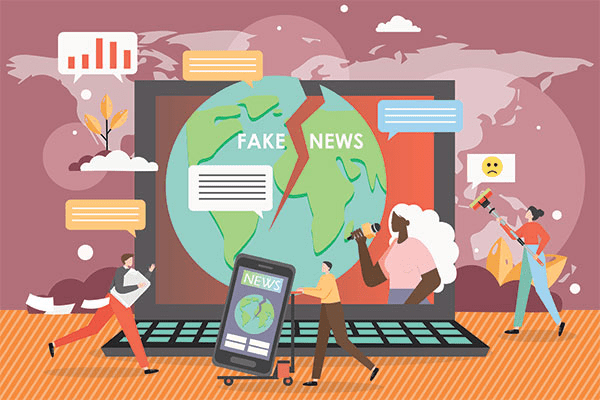
In addition, a study conducted in Canada found out that 84% of adults could not distinguish real from fake content! This number is shocking and this why media literacy is more important than ever for today’s youth.
Youth and research: a promising future | Canada Foundation for Innovation
Well-known and popular digital platforms, such as TikTok and Youtube, are used so much by today’s younger generation that it is making older adults realize that true, honest information is just like civic understanding. Sam Wineburg, an educational psychologist, conducted a study that resulted in 82% of junior high students not being able to set apart an advertisement and a news article from the Internet. More information on this can be accessed here: Evaluating Information: The Cornerstone of Civic Online Reasoning | Stanford Digital Repository
Many of the studies have been noticed by The United States Government, which have allowed for the development of comprehensive programs, just last year, to teach school-age students how to analyze and locate the sources of online content. These programs will also educate young kids to think critically about how AI produces information.
Students can be expected to learn about digital citizenship, as well, by knowing how to have healthy experiences online with others. How to teach students critical thinking skills to combat misinformation online.

There are many effective ways to teach students how to recognize or how to avoid misinformation. It is always helpful as an educator to explain to their students how the source is inaccurate. It is helpful to offer accurate content in its place. It is important to always place inaccurate sources with accurate information. For example, a student says an incorrect answer they got from social media. As a teacher, you can replace this answer with the correct information. Be sure to explain why the answer from the Internet is wrong. This technique is about substituting wrong information with correct sources.
Another very effective technique as an educator is to always challenge the fake information, not your students.
Educators should not focus on what their students believe, but the fake sources and what they are. As an example, you can have your students write a rough draft of a report on a certain topic. One of your students references several sketchy sources. You must work with your student and explain how the shady sources work with the argument’s power.
As an instructor, always develop opportunities for students to work on practicing the evaluation of information. Additional ways that can help students be better analyzers of misinformation are, have them ask themselves who is the author of the source and what is the intended audience, always look for evidence, such as what sources are cited, analyze other sources and see if the information is consistent, and lastly, verify the source is up to date. Students can also evaluate whether the source was meant to be humorous or to intentionally mock someone or something. Here is the link to these techniques: Teaching students to recognize misinformation – Teaching@UW
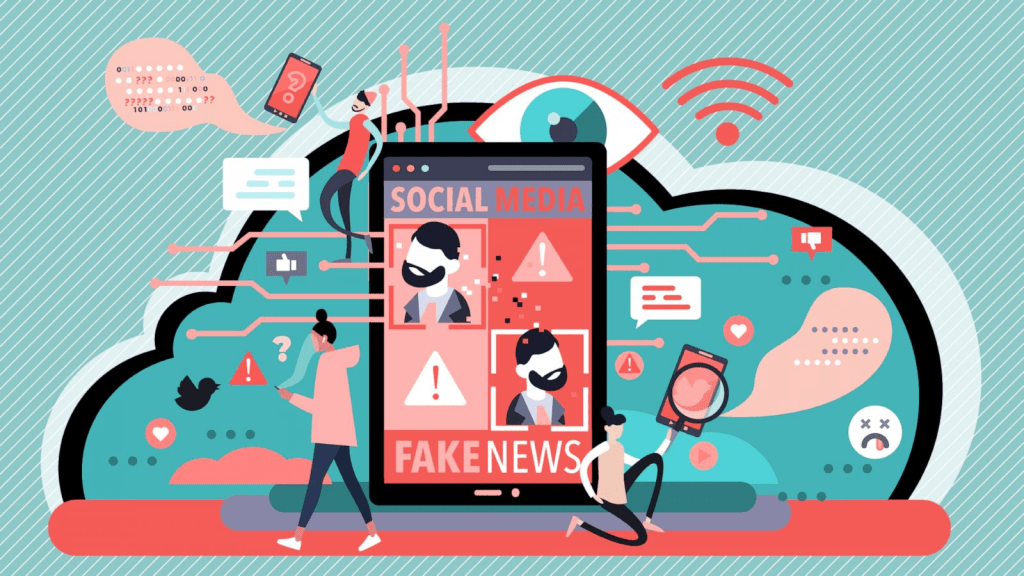
Individuals in society are also able to curb or diminish misinformation by debunking or fact-checking sources. Research has found that debunking is very successful in real-world settings and individuals. However, fact-checking has its cons. It can be very time-consuming, and people often become very predisposed to fake content on social media. More studies still need to be done about the true effects of fact-checking.
Link to article: What interventions can be used to counter misinformation effectively?
Still, it helps if individuals do have basic fact-checking skills to determine a source’s credibility and to think twice before they post a specific content.
Pre-bunking assists people in being able to spot false content in the first place.
Research has indicated that pre-bunking is workable in real-world settings, such as digital platforms. More studies, however, need to be conducted on pre-bunking. Literacy training is very important to today’s youth and society. They help people determine a source’s credibility. This type of training has the most potential when compared to other interventions to counter misinformation. Nudging involves very small environmental changes that alter individuals’ behaviors to try and prevent them from sharing dishonest information. Nudges have been found to have great significance when combined with inoculation. More research, however, still needs to be done. What interventions can be used to counter misinformation effectively?
In conclusion, misinformation has been an issue for decades. There are many ways educators and individuals can take to curb the spread of fake content; however, it can be hard to prevent. Rises in technology have made false content easier than ever before to be posted online. With digital literacy increasing in schools, misinformation should be able to decrease.
References:
Images Retrieved from Microsoft Bing
Abrams, Zara. (2024, 1, September.) How to teach students critical thinking skills to combat misinformation online. Retrieved from: American Psychological Association
Youth and Research: a promising Future. Retrieved from: http://www.innovation.ca
Evaluating Information: The Cornerstone of Civic Online Reasoning (2016). Retrieved from: Stanford Digital Repository
Teaching Students to Recognize Misinformation. The University of Washington. Retrieved from: https://teaching.washington.edu
What interventions can be used to counter misinformation effectively? American Psychological Association. Retrieved from: http://www.apa.org
 Kayla Miguel